Tom Henry

Software Engineer

I am a software engineer from the University of Notre Dame, comedian, and Chicago sports fan! In my personal website you will be able to find information regarding my professional experience, programming projects, accolades, and more!

Download Resumé

RESUMÉ

EDUCATION

University of Notre Dame
B.S. Computer Science (Expected Graduation: May 2023)
  • GPA: 3.815
  • Relavent Coursework
    • Data Structures, Logic Design, Discrete Mathematics, Linear Algebra, Systems Programming, Computer Architecture, Theory of Computing
  • Honors and Awards
    • Dean's List: Represented the top 30% of the College of Engineering
    • Stephen Saunders Memorial Award: Awarded to a freshman who best displays a strong sense of spirit, faith, dedication to academics, enthusiasm for athletics, and positive influence on their dorm community.

EXPERIENCE

Misinformation Early Warning System (MEWS)
Software Engineering Intern / Spring 2021 - present
  • Charged with enhancing optical character recognition, image object detection, image manipulation, and image similarity tasks to help detect social media misinformation trends in Indonesia
  • Integrated a distributed task manager to increase efficiency of project pipeline.
  • Presented MEWS at NeurIPS 2021 conference
Program Manager – Notre Dame Preternship
Program Manager / Spring 2021
  • Managed two teams of 3-4 programmers in the design, plan, and execution of software projects for industry representatives from Google and IBM
  • Led weekly scrums, sprints, and code reviews for both teams.
Pariveda/A2D Software Engineering Intern
Software Engineering Intern / Winter 2021
  • Implemented a cross platform application using React Native to assist addicts with their healing process utilizing A2D’s addiction curriculum.
  • Developed platform to connect addicts with addiction support counselors.
Teachers Assistant, Data Structures
TA / Spring 2021
  • Focused on facilitating student understanding of material for a Data Structures course taught in C++.
  • Assigned office and lab support hours to help lead students to excel in the course.

PROJECTS / ACTIVITIES

PROJECTS

Vendor Analysis Dashboard
  • Developed, implemented, and tested an application to score vendors and produce data visualizations in Python for decreasing overhead and increasing leverage with suppliers for an external industrial representative from SpaceX.

    GitHub Repo
Chicago Crime Visualized
  • Independently developed and tested a map in Python illustrating the information and location of specific crimes occurring in the greater Chicagoland area over variable time ranges.

ACTIVITIES

ND Data Club
  • Created a content-based movie recommendation system using a large dataset from IMDB and Wikipedia using Python.
  • Club focused toward data science and machine learning exploration.
Foreign Object Debris Detection Research
Project Manager - Student International Business Council
  • Nominated by Notre Dame’s largest student organization to lead a team of engineers and business students in delivering a design for an optimal foreign object detection system for Pratt & Whitney.
  • Managed and coordinated weekly research tasks for a team of 8 engineers.
Cybersecurity Case Study
Travel Team Member - Student International Business Council
  • Formulated and presented a short-term and long-term solution for a cybersecurity breach case study. Presented to PricewaterhouseCooper in Chicago, IL.

RESEARCH

Misinformation Early Warning System

Notre Dame AI Lab - Undergraduate Research Assistant

What is MEWS?

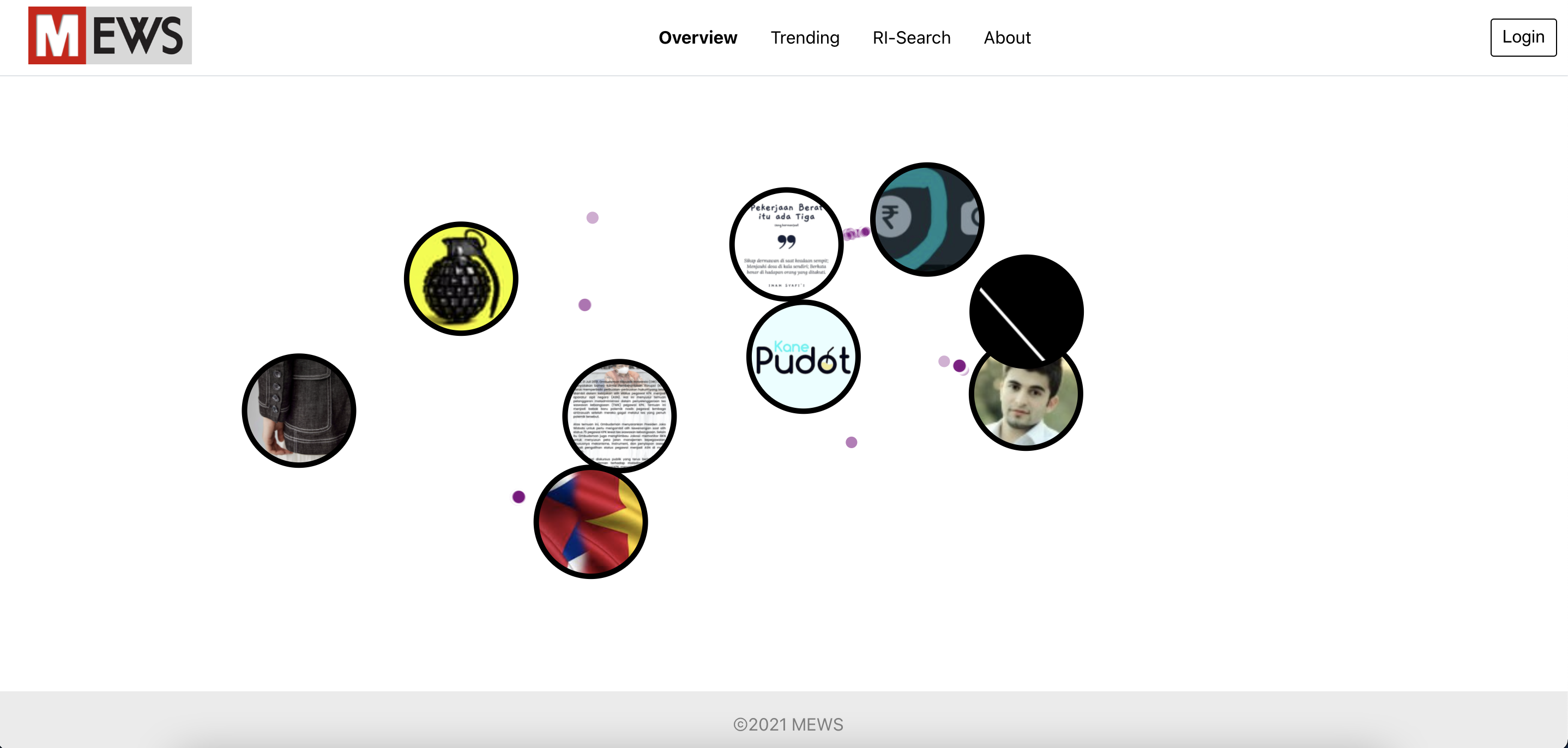
The MEWS (Misinformation Early Warning System) helps identify misinformation trends in real time as they occur on social media. MEWS is intended to be used by journalists, civil society organizations, and some government agencies.

How does it work?

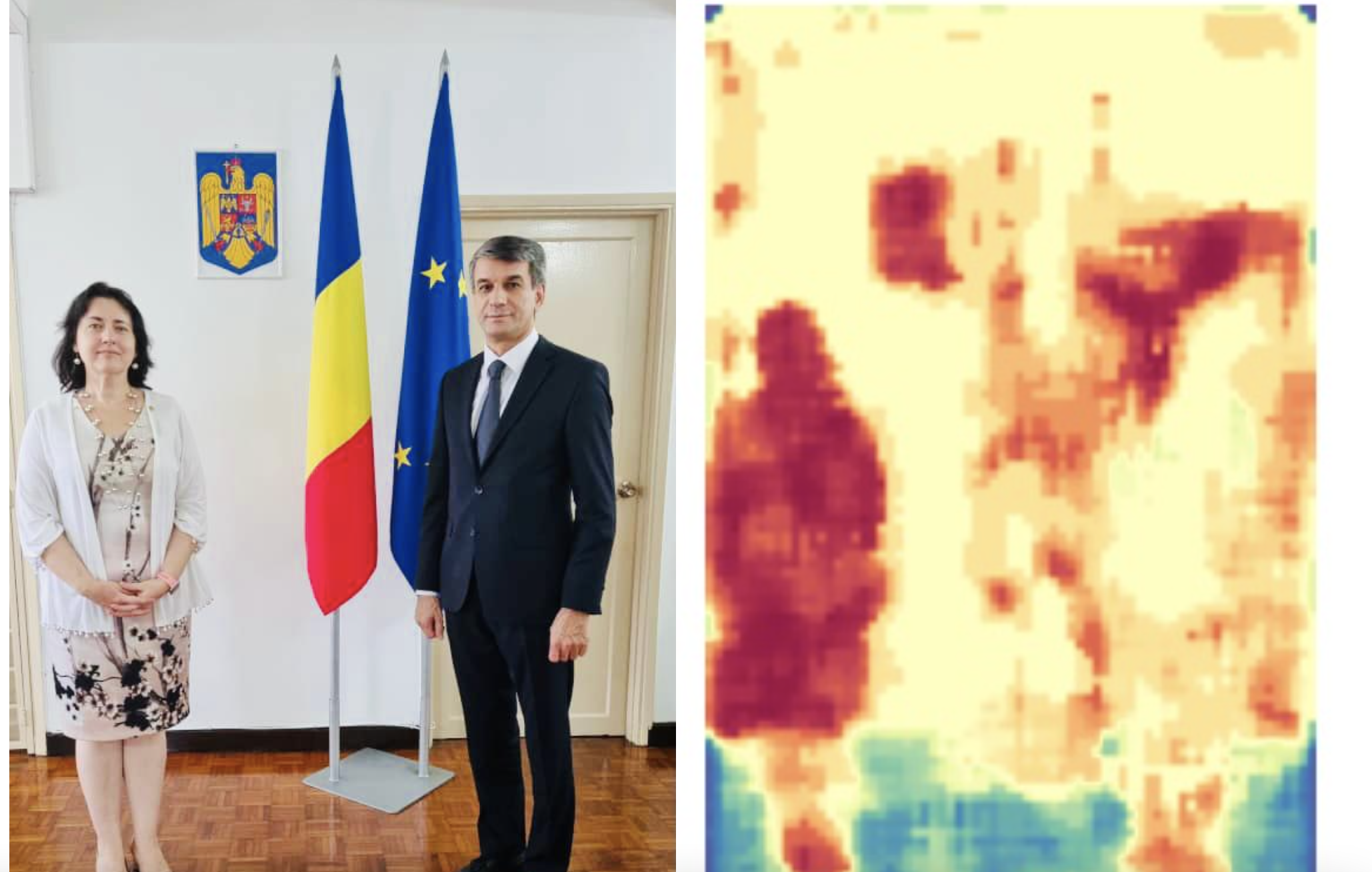
MEWS operates through a distributed task management platform called celery, which allows us to queue tasks for compute nodes to operate on asynchronously. We call this the chain. The chain starts by pulling images and metadata from social media platforms and storing them into our database. Next, we perform optical character recognition on these images to store text that was placed over or within an image. After that, our images are sent through manipulation detection or ADQ2 to spot potential image manipulations. We then utilize detectron2 from Facebook Research to recognize objects within the image that we will use in the provenance portion of the pipeline later. Then, using Insight Face and Trenton Fords WikiFace’s package, we are able to detect and sometimes recognize people in an image. We then find features in the image that we can compare across the entire database. Finally, we generate a graph using similarities detected within the image itself, text pulled from OCR, objects found in the image, people, captions, and associated hashtags.

Overview page displaying clusters of potential misinformation trends in the Indonesian context Image manipulation heatmap